Why Finding a Farmer Matters
You cannot make bread that heals if you don’t know where your flour comes from.
This isn’t ideology. It’s biology. Your gut microbiome is not separate from the soil that grew your grain. If the soil is depleted, you are not nourished. Your body is the food system. Most of us have no idea how broken that system is.
The wheat in commodity bread is grown for yield and price – nothing else. Four companies control the seed, sell the chemicals required to grow it, and buy the grain back at a price they set. Farmers are locked in. They call it the commodity trap. The farmer gets about 16p per kilo. The supermarket sells flour at £2.
Between field and loaf, the bran is stripped out – the part that feeds your gut microbiome, supports your immune system, gives you the fibre you need. That’s 20-25% of the grain. It goes to animal feed. Or compost. Or maggot food.
We throw away 24 million slices of bread a day in the UK. Because it has no value. Because it’s been made valueless. The true cost doesn’t just disappear. We pay it in NHS bills, in water treatment, in soil degradation, in climate destabilisation. We just don’t pay it at the till.
This is what you’re stepping out of when you find a farmer.
When you know who grew your grain, everything changes. The farmer gets a fair price. They get feedback. They get to use their skills again – as soil scientists, as plant biologists, as problem solvers – instead of being reduced to factory floor operatives doing field processes when they’re told.
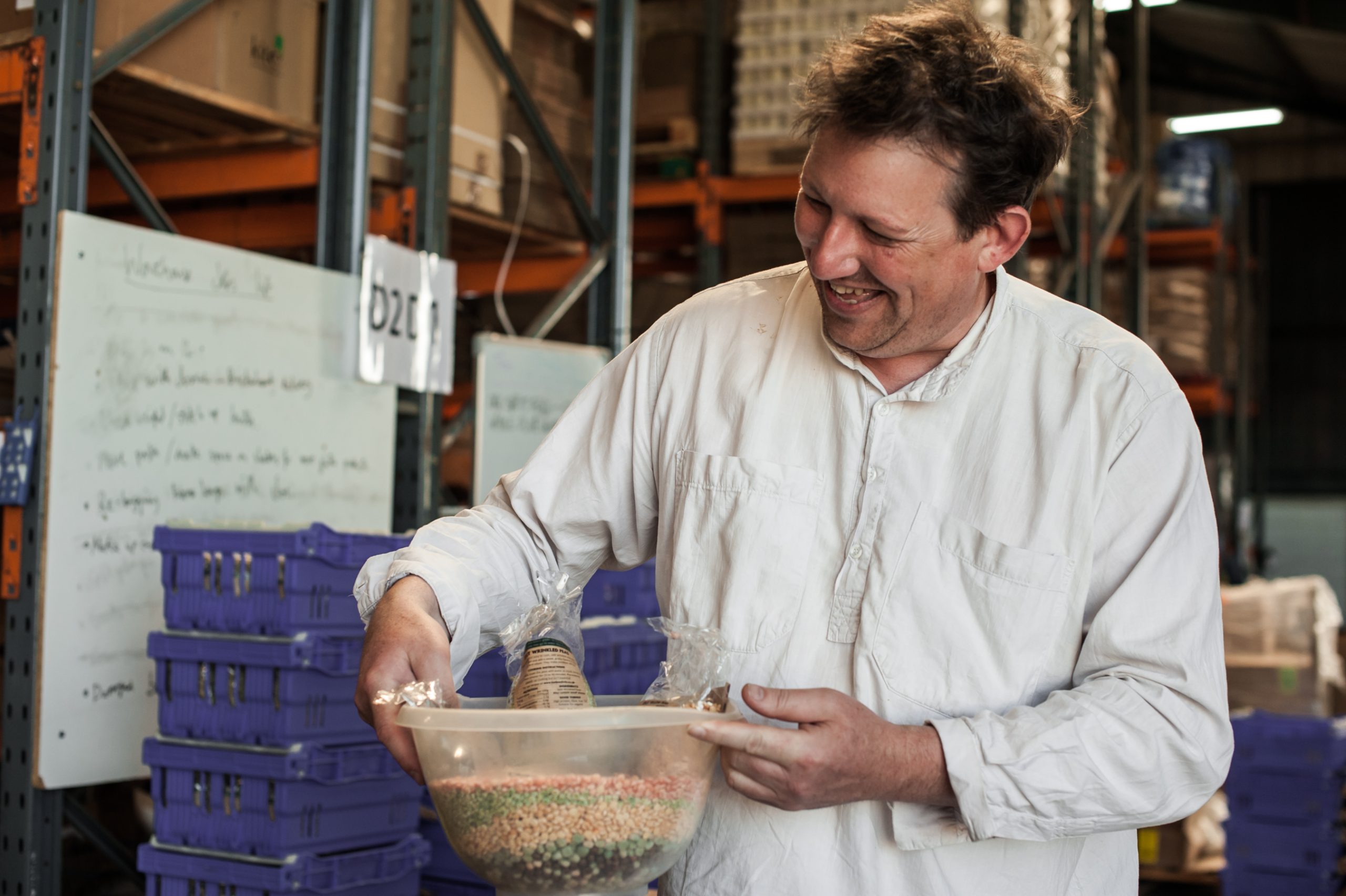
And you get flour that was grown with your health in mind. From soil that’s alive. From a system that makes sense. Josiah Meldrum, who co-founded Hodmedod in 2012, puts it simply: just ask where your food comes from. Ask who grew it. Ask why we don’t know.
That’s my students task this week. Find a farmer. Not online – in person if possible. Go to a farmers’ market, find a local grower, knock on a farm gate if you have to. Introduce yourself. Ask them about their work, their challenges, what they wish eaters understood.
This is where BALM begins.
Listen.
In this conversation, Josiah Meldrum from Hodmedod explains why direct farm connections matter. Hodmedod was founded as a response to market failure – creating relationships that support farmers, restore landscapes, and deliver genuine nutrition to eaters. Not through ideology, but through practical, working partnerships.
Key points:
- Food is an opportunity to reengage with the world – we all eat, three times a day
- Market failure means farmers receive wrong signals from retailers and policy
- Our current food system serves neither human health nor living systems
- Direct farm relationships can correct this – supporting farmers, land, and eaters simultaneously
- Your internal system is not separate from the food system – they are one and the same
Your task:
Find a farmer. This could be a grain farmer, a market gardener, someone at your local farmers’ market – anyone producing food in your area. Make contact. Ask them about their work, their challenges, what they wish eaters understood. Listen.
This is where BALM begins – not in the kitchen, but in the field.