Putting the Pain in Copains
| Recipe By: | Kellie Wheelan |
|---|---|
| Recipe Status: | Untested |
| Kind of Bake: | Retarded overnight – San Francisco Style – mixed in the morning, retarded in the fridge overnight, baked at any point the next day |
| Makes: | 2 x 714 gram loaves |
| Created Over: | 3 days |
| Recommended For: |
|
| Diversity Score: | Diversity Score= 20 (Grains = 4, Legumes = 2, Seeds = 3, Herbs / leafy plants = 7, Nuts = 1, Fruit / plant additions = 1, Flowers (grouped) = 2) |
|---|---|
| Increase Fibre: | This recipe increases fiber by combining a wide range of whole and minimally refined plant ingredients across the bread, pesto, and accompaniments. The dough includes whole wheat flour and a botanical blend of grains, seeds, legumes, and ancient wheats, all of which contribute dietary fiber from bran and seed coatings. The pesto adds additional fiber through basil, garlic, and pine nuts, while the roasted grape tomatoes and chèvre serving elements further increase plant-based content. Together, these ingredients create a diverse and layered source of dietary fiber that supports digestive function and contributes to gut microbial diversity. |
| Probiotic Serving Suggestion: | Roasted Grape Tomatoes, Farm-fresh Chevre Cheese |
| Antioxidants: | This dish combines multiple antioxidant families: Polyphenols ? herbs, olive oil, grains Carotenoids ? tomatoes Vitamin antioxidants ? vitamin C (lemon), vitamin E (pine nuts) Flavonoids & anthocyanins ? flowers, herbs, grains |
| Suggested Botanical Blend: | Blend Number 15 Italian Summer Meadow |
Ingredients
| Ingredients | Quantity |
|---|---|
| For the Pesto: | Measurements follow |
| Fresh basil leaves (no stems) | 30 g |
| Toasted pine nuts | 40 g |
| Garlic | 2 cloves |
| Lemon juice | 30 g |
| Extra virgin olive oil | 50 g |
| Parmesan cheese (freshly grated) | 25 g |
| Salt and pepper | To taste |
| For the Leaven: | Measurements follow |
| 100% hydration starter | 30 g |
| Water | 55 g |
| Whole wheat flour | 45 g |
| For the Dough: | Measurements follow |
| Leaven | 130 g |
| Water | 435 g |
| White bread flour | 300 g |
| Semolina flour | 200 g |
| Italian Summer Meadow Botanical Blend (#15) | 125 g |
| Maldon salt | 13 g |
| Inclusions: | Measurements follow |
| Pesto puree | 175 g |
| Whole milk mozzarella cheese (finely grated) | 50 g |
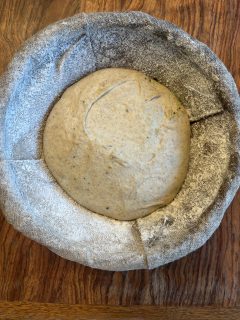
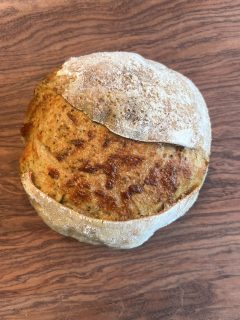
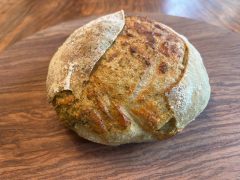
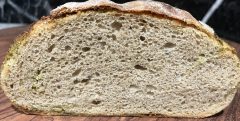
Recipe Introduction
A CONNECTION TO THE GARDEN
Created as a Vaking As Lifestyle Medicine graduation loaf from The Sourdough School, this bread represents not only technical growth but an understanding of baking as a shared, lived experience. The herbaceous pesto and slow-roasted tomatoes celebrate the abundance of the season, with basil and tomatoes gathered from the garden and wheat grown by dedicated grain farmers, connecting the loaf to both the land and the community behind each ingredient.
Inspired by a visit to my teacher's home in England, where we walked through her garden gathering herbs, flowers, and vegetables to use in both bread and the accompaniments that surrounded it, I returned home with a new appreciation for bringing the garden to the kitchen. What was once a patch of bare dirt became a thriving and fruitful garden, built one block at a time, where I now grow many of the herbs and vegetables that find their way into my baking. As a seasonal loaf, it reflects the natural cycles of the earth, honoring the rhythm of planting, tending, harvesting, and sharing that connects us more deeply to the land and to one another.
It is meant to be broken and shared, inviting people to gather, linger, and participate in the experience of eating together.
This loaf naturally lends itself to both sequenced and symbiotic eating. It can be torn and enjoyed gradually—piece by piece as conversation unfolds—or paired with complementary foods like soups, salads, and fresh produce, creating a balanced and interconnected meal. In this way, the bread becomes part of a larger system of nourishment, where each element enhances the other.
This loaf naturally lends itself to both sequenced and symbiotic eating. It can be torn and enjoyed gradually—piece by piece as conversation unfolds—or paired with complementary foods like soups, salads, and fresh produce, creating a balanced and interconnected meal. In this way, the bread becomes part of a larger system of nourishment, where each element enhances the other.
This loaf is dedicated to my husband, whose unwavering support made this journey possible. When I told him I wanted to take the class, travel to England for a workshop, and transform our yard into a productive garden, he encouraged every step of the adventure and helped build the garden block by block. He remains my favorite person with whom to break bread, and I believe we should all be so fortunate to have someone like him in our lives.
Studies
| Study | How this study has been applied |
|---|---|
| “MOVING THROUGH SPACES – LEISURE WALKING AND ITS PSYCHOSOCIAL BENEFITS FOR WELL-BEING: A NARRATIVE REVIEW” | This recipe is informed by Marta Anna Zurawik’s work on leisure walking and well-being, particularly her emphasis on slow, attentive engagement with place. Before baking, I gather tomatoes and basil from the garden, taking time to notice textures, scents, and the surrounding environment. During the autolyse, I step away for a brief walk, allowing the dough to hydrate and develop while also creating space for mental rest. After the meal, I suggest a walk with friends to extend social connection. Gentle movement after eating may also help support more stable blood sugar levels. In this way, the recipe becomes more than nourishment. Baking bread becomes a rhythm of gathering, baking, sharing, and moving that supports both physical and social well-being. |
| “Exercise and associated dietary extremes impact on gut microbial diversity” | This loaf is partly influenced by findings from “Exercise and associated dietary extremes impact on gut microbial diversity,” which highlight how diets rich in plant diversity and higher protein intake are associated with greater gut microbial diversity. In response, this recipe intentionally combines a wide range of grains, seeds, herbs, and plant compounds—alongside protein-rich elements like cheese and nuts—to support microbial diversity, while reflecting a style of eating that complements an active, health-focused lifestyle. |
| “Food Order Has a Significant Impact on Postprandial Glucose and Insulin Levels” | This study directly informed how I approach this loaf and how I structure meals around it. The research shows that consuming vegetables and protein before carbohydrates significantly reduces postprandial glucose and insulin responses compared with eating carbohydrates first. In practice, I now intentionally enjoy foods like salad, vegetables, and protein alongside or before this sourdough, rather than starting with the bread. The bread becomes the final part of the meal rather than the first, aligning with a sequenced eating pattern that I follow because I believe it supports more stable blood sugar levels and improved insulin sensitivity over time. |
| “The Metabolic Concept of Meal Sequence vs. Satiety: Glycemic and Oxidative Responses with Reference to Inflammation Risk, Protective Principles and Mediterranean Diet” | This recipe takes inspiration from Shapira’s research on how the order of foods eaten can influence satiety, blood sugar response, and oxidative stress after meals. The loaf and its accompaniments are structured to reflect the “Mediterranean-style” protective sequence described in the paper, beginning with fiber- and antioxidant-rich elements (roasted tomatoes, pesto made with herbs and olive oil) before carbohydrate-dense sourdough. The inclusion of protein- and fat-containing components such as mozzarella, nuts, and olive oil also aligns with evidence that protein and fats can help reduce blood sugar spikes when eaten alongside or before carbohydrates. Overall, the recipe applies meal sequencing principles in a practical way to support more balanced digestion and a steadier post-meal response. |
| “Health Benefits of the Mediterranean Diet: Metabolic and Molecular Mechanisms” | This recipe was influenced by research on the Mediterranean diet, which shows that eating mostly plants, whole grains, olive oil, nuts, and herbs can support overall health. The article explains that these foods work together to reduce inflammation, support heart health, and benefit gut health over time. I used these ideas when building this loaf by focusing on a wide variety of plant-based ingredients, including herbs, tomatoes, grains, and olive oil, instead of relying on just a few key nutrients. The pesto, roasted tomatoes, and botanical flour blend were all chosen to reflect this idea of balance and variety in everyday eating. |
| “The Mediterranean diet and health: a comprehensive overview” | The article “The Mediterranean diet and health: a comprehensive overview” by Guasch-Ferré and Willett (2021) influenced my recipe development by providing strong evidence for using a Mediterranean dietary pattern as the foundation of my Pesto and Mozzarella Sourdough with Roasted Grape Tomatoes. The review highlights that the Mediterranean diet is associated with reduced risk of cardiovascular disease, type 2 diabetes, metabolic syndrome, and cognitive decline due to its emphasis on plant-based foods, olive oil, whole grains, nuts, herbs, and vegetables. This directly shaped my recipe design by encouraging a plant-forward structure built around basil pesto, roasted tomatoes, botanical flour blends, and sourdough made from diverse grains, rather than refined or ultra-processed ingredients. The article’s focus on extra-virgin olive oil as a key protective fat informed my decision to use it consistently throughout the recipe in the dough, pesto, and roasting process due to its anti-inflammatory and cardioprotective properties. In addition, the emphasis on dietary patterns rich in antioxidants and polyphenols influenced my inclusion of garlic, basil, lemon, tomatoes, seeds, and herbs, creating a dish with a high antioxidant profile aligned with the article’s findings on disease prevention. The review also highlights the importance of minimally processed, sustainable foods, which supported my use of fresh seasonal ingredients and traditional sourdough fermentation. Overall, the article guided my recipe by reinforcing the importance of whole, diverse, plant-rich ingredients that support both human health and environmentally sustainable eating patterns. |
| “Anti-inflammatory, immunomodulatory and anti-oxidant effects of Ocimum basilicum L. and its main constituents: A review” | This research on sweet basil helped shape my recipe by showing that basil is more than just a flavouring herb, as it contains natural plant compounds linked to anti-inflammatory, antioxidant, and immune-supporting effects. That encouraged me to use a generous amount of fresh basil in the pesto and treat it as a key ingredient rather than something secondary. It also influenced how I built the whole loaf, combining basil with other nutrient-rich ingredients like extra virgin olive oil, garlic, lemon, tomatoes, whole grains, nuts, and seeds so the recipe brings together a wide range of plant compounds that can work together in the body. These choices align closely with the Mediterranean diet, which is known for being rich in plant foods, healthy fats, and herbs, and is associated with supporting heart health, reducing inflammation, and promoting overall long-term wellbeing. By following this approach, the loaf reflects not only traditional flavour pairings but also a broader dietary pattern where ingredients like basil, olive oil, and vegetables are used together to support both taste and health in a balanced, everyday way. |
Equipment
- Digital kitchen scale
- Large mixing bowl
- Small bowl/jar (for leaven)
- Dough whisk
- Bench scraper
- Dough thermometer
- Proofing bowl
- 2 x 500 gram round bannetons
- Bread lame
- Dutch oven
- Parchment paper
- Cooling rack
- Chef’s knife
- Cutting board
- Measuring spoons
- Food processor
- Dry skillet
- Cheese grater
- Citrus juicer or reamer
- Tea towels
Tin Size cm (HxWxD)
16 cm x 23.9 cm x 23.9 cmStarter Quantity
Total starter (130 g): 30 g 100% hydration starter, 55 g water, 45 g whole wheat flour
Status of Starter
bubbly, lively second-build starter
DDT
25°C (77°F)
Flours
- For the Italian Summer Meadow Botanical Blend (#15), I used wheat berries from Palouse Heritage, a small farming operation located in the Inland Pacific Northwest.
- For the white bread flour, I used Ardent Mills Kyrol Premium Flour
- For the semolina, I used Bob’s Red Mill
Baking Temperature
180°C/160°C fan/350°F/gas mark 4
Baking Time
60 minutes covered, 10-12 minutes uncovered
Timings
| Step | Day | Timings (hh:mm) |
|---|---|---|
| Refresh starter | Day 1 | 11 PM |
| Make leaven | Day 2 | 10 AM |
| Mix and autolyze | Day 2 | 12 PM |
| Continue with autolyze and mix in leaven | Day 2 | 12:30 PM |
| Add salt— start stretch and fold | Day 2 | 1:15 PM |
| End bulk, last stretch and fold | Day 2 | 3 PM |
| Add pesto. Shape, and bench time | Day 2 | 3:30 PM |
| Floor time | Day 2 | 4-5 PM |
| Final Proof | Day 2 | Overnight in the fridge |
| Score, Bake | Day 3 | Anytime after 8AM but before 4PM |
How to Store
This bread can be stored for up to 5 days when wrapped in a clean tea towel and kept at room temperature in a cool, dry environment—though in my house it rarely lasts that long. Wrapping the loaf in cloth helps preserve the crust while allowing airflow, preventing excess moisture and maintaining texture.
Top Tips
For the best flavor, use freshly picked Genovese basil, as its sweet, peppery character and tender dark green leaves create a more vibrant pesto. I recommend preparing the pesto when first mixing the dough and refrigerating it until shaping. Because durum wheat can absorb more water, add additional water in 10 g increments if needed to achieve the desired hydration. During shaping, sprinkle semolina on the work surface for added texture, then incorporate the pesto and mozzarella by smearing the pesto across the dough and sprinkling the mozzarella on top during the final shaping. This loaf was made following the workshop methods taught during the 3-day summer course, including botanical mixing, bassinage, proofing, shaping, and baking techniques, alongside the timing schedule provided in The Sourdough Cookbook and course materials.