• Skip to main content
  • Skip to after header navigation
  • Skip to site footer

The Sourdough School

DIVERSITY BREAD® || PERSONALISED BREAD || BAKING AS LIFESTYLE MEDICINE

Bake With The Hands Of An Artisan And The Mind Of A Clinician

Set within the walled gardens of Dr Vanessa Kimbell’s beautiful Victorian home in rural Northamptonshire, The Sourdough School is home to the Proven Bread Programme, teaching the art and science of nutrition, the gut microbiome and fermentation in bread. We train bakers to produce Diversity Bread® and healthcare professionals to personalise bread through Baking as Lifestyle Medicine. Arrange a conversation today.

WhatsApp: +44(0)7813308301
[email protected]
Follow on Instagram

Book A Consultation
  • Facebook
  • Instagram
  • Pinterest
  • X
Student Login
  • Workshops
    • Book a Call
    • 2 Day Workshops
    • 3 days Personalised Bread Workshops
    • Tuscan Retreat
    • 12 Week Post Course Support
    • Request a Callback
  • About
    • About The Sourdough School
    • Priority Access: Join the Waiting List
    • Contact Us & FAQ
    • Reviews
    • General FAQ’s about The School
    • Diversity Bread™
    • Where to stay & more
    • Training Bakers & Healthcare Professionals
    • Educational Awards Programme
    • The Team
    • A Social Enterprise
    • Contributors & Guest Tutors
    • What Our Students Say
  • Learn
    • The Diploma – January 2027
    • Request a callback
    • Graduation Recipe Collection
  • What is Proven?
    • Baking as Lifestyle Medicine (BALM)
    • Bread as Preventative Health
    • BALM & Bread in The Blue Zone
    • Proven Bread Documentary
    • Prove it – The Case Studies
    • Proven: Bread Podcast
    • Proven
    • Login
  • Personalised Bread
    • Personalising Bread Using Nutrigenetics
    • Personalisation
    • Personalising Bread
  • Workshops
    • Book a Call
    • 2 Day Workshops
    • 3 days Personalised Bread Workshops
    • Tuscan Retreat
    • 12 Week Post Course Support
    • Request a Callback
  • About
    • About The Sourdough School
    • Priority Access: Join the Waiting List
    • Contact Us & FAQ
    • Reviews
    • General FAQ’s about The School
    • Diversity Bread™
    • Where to stay & more
    • Training Bakers & Healthcare Professionals
    • Educational Awards Programme
    • The Team
    • A Social Enterprise
    • Contributors & Guest Tutors
    • What Our Students Say
  • Learn
    • The Diploma – January 2027
    • Request a callback
    • Graduation Recipe Collection
  • What is Proven?
    • Baking as Lifestyle Medicine (BALM)
    • Bread as Preventative Health
    • BALM & Bread in The Blue Zone
    • Proven Bread Documentary
    • Prove it – The Case Studies
    • Proven: Bread Podcast
    • Proven
    • Login
  • Personalised Bread
    • Personalising Bread Using Nutrigenetics
    • Personalisation
    • Personalising Bread

Advice on Gathering & Milling Clover

Estimated time: 6 mins.
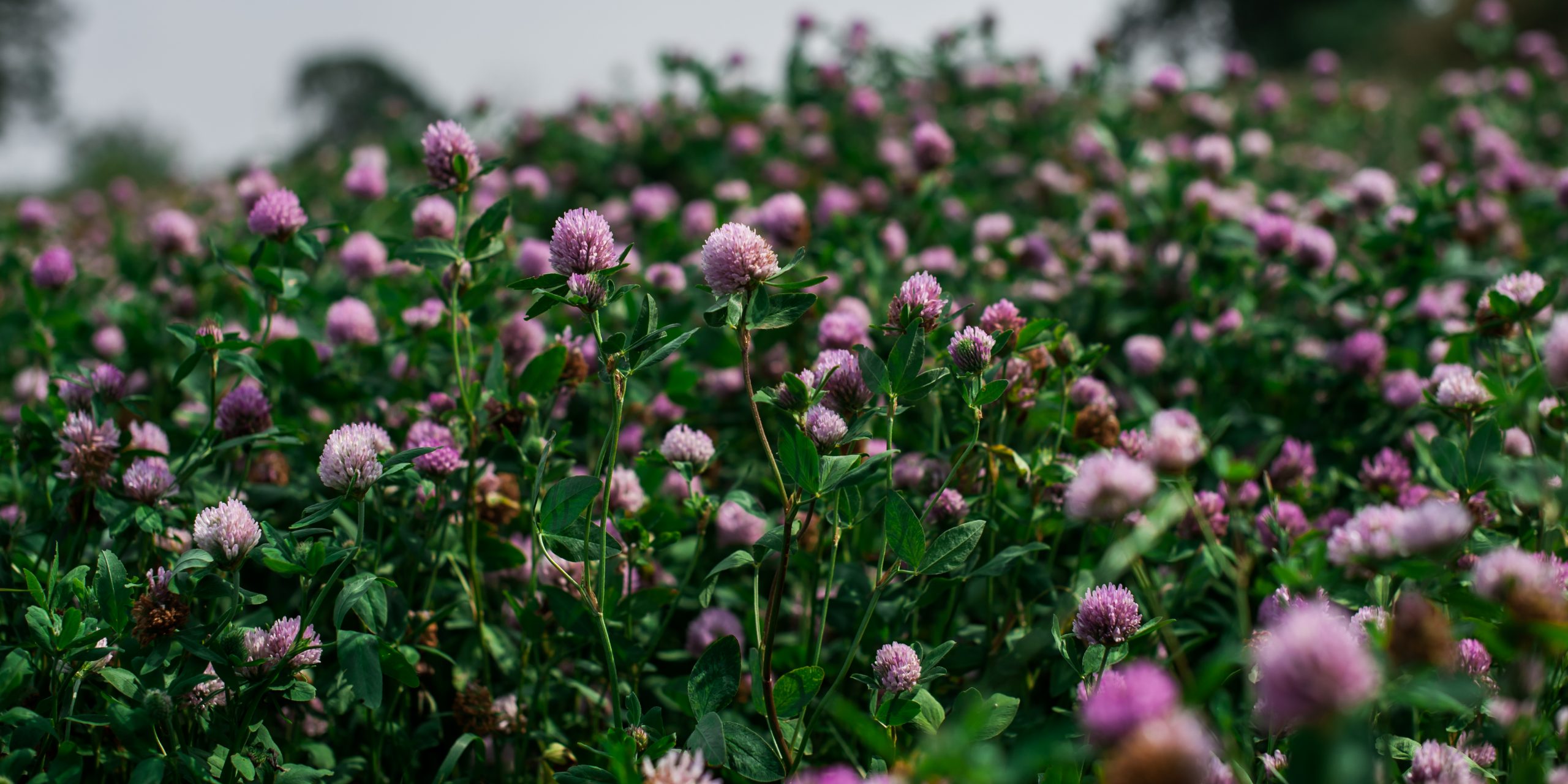
Clover

Clover, Trifolium, is one of those amazing plants that grows in abundance all over the countryside. It is native to Europe, and can be found throughout the continent as well as in Russia, coming in white or red varieties. I tend to prefer to use the deeper red clover, with its soft, brush-like deep pink blossoms, as it is higher in polyphenols.

Clover is renowned by herbalists because it contains isoflavones, a type of phytoestrogen. Herbalists often recommend it for hormonal balance, and there are many studies that cover this topic in greater detail.

It is a very interesting plant because you can sometimes stumble across an entire field of clover. As a part of the pea family, clover has the unique ability to fix nitrogen in the soil, so it is often used by farmers as a cover crop that can also feed their cattle.
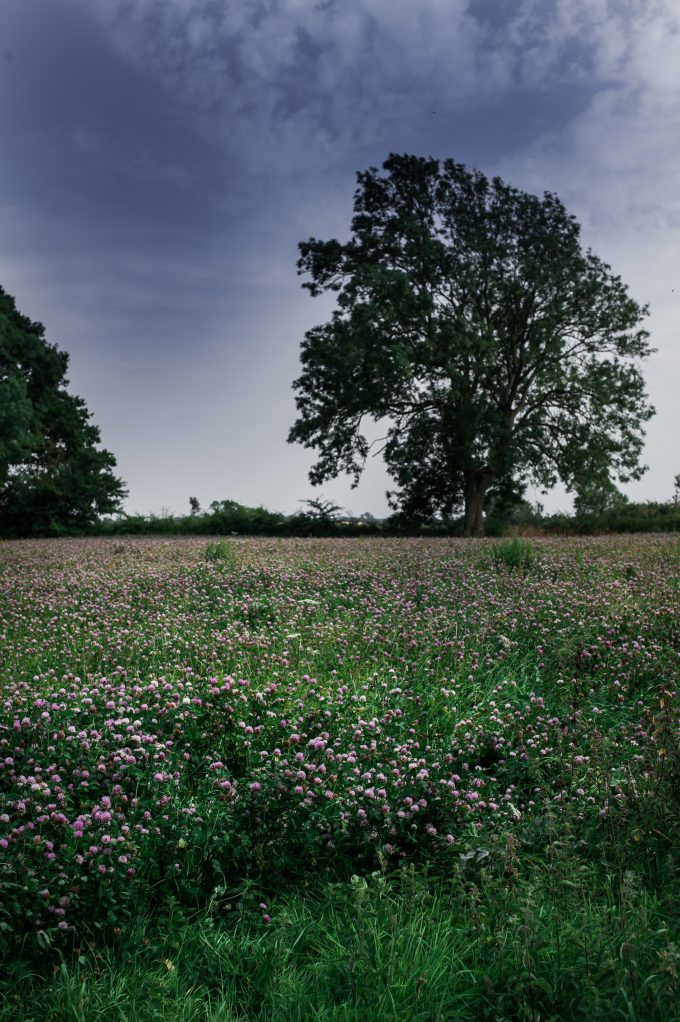
If you eat fresh clover (which I have just done while writing this up), it has an almost sweet, slightly underripe apple flavour.

When it comes to milling, there are two methods for using use clover in botanical blends. First – and this is my preferred method – clover can be milled fresh. When milling fresh clover, you really only need 6–8 clover heads per 500g flour.

If you eat fresh clover (which I have just done while writing this up), it has an almost sweet, slightly underripe apple flavour. Picked in the field at just the right time, when the blooms are absolutely filled with nectar, there is a natural sweetness to clover blossoms that is just gorgeous. There is something very green and organic about it. Many people describe the flavour as close to vanilla, but I disagree. To me, the taste is one of a sweet grassiness, which I love.

The second milling method is to dry the clover heads. Cut them from the stems and put them in a brown paper bag to dry in the airing cupboard. As it dries, the clover will turn brown. The flavour of dried clover changes, going from grassy and sweet towards a more mellow woodiness. I use dried clover in my botanical blends in the winter when clover is not naturally in bloom, using 8–10 heads of dried clover per 500g flour. Sometimes, if the clover heads are quite large, they do need to be pulled apart so that they can feed through the mill.

Some of the plants that we gather for our Botanical Blends at the Sourdough School have been eaten and incorporated into the human diet for millennia. If you look at the history of these plants, you will see references to civilisations such as the Greeks and the Romans using them regularly. It becomes quite clear when you look at the ways in which we once gathered and harvested our food that humans traditionally ate an incredibly diverse diet.

It is amazing to think that very common, everyday plants, such as clover, are actually just there, at our feet and easily accessible. Being able to incorporate them into the flour and the breads we make feels, in every sense, like something we were always meant to be doing. Often when people see me harvesting these botanicals, they are surprised that we can eat things that grow naturally in the countryside. We once had all of this valuable knowledge, but over time we have lost it. It is time that we go back and take a really good look at what is right under our noses.

DISCLAIMER: The advice given in this post is based on harvesting in the UK. While we are sharing what we do here at the Sourdough School, ingesting plants that you are not absolutely certain about, or have not identified with 100 per cent certainty, can be dangerous. It is very important that you verify any plants that you harvest before consuming them.

Student Login

All reasonable care is taken when writing about health aspects of bread, but the information it contains is not intended to take the place of treatment by a qualified medical practitioner. You must seek professional advice if you are in any doubt about any medical condition. Any application of the ideas and information contained on this website is at the reader’s sole discretion and risk.

  • Facebook
  • Instagram
  • Pinterest
  • X

Terms and Conditions
Privacy Policy

Call +44 (0)7813308301
Email [email protected]

The Sourdough School is Registered in England & Wales: 08412236

BANT member
Lifecode Gx

Copyright © 2026 · The Sourdough School · All Rights Reserved · Website by Callia Web