Throughout my work you will notice that I use different words to describe what you do especially with the Blocks 5, 6, 7, 8 and 9 — the seeds, nuts, fruit, flakes and porridge. You might see inclusions in one place, additions in another, and finishes or coatings somewhere else. This is not inconsistency. The name changes because the technique changes. The same jar of seeds can play four completely different roles in your bread depending on when and how you use it.
Here is how to think about it.
Inclusions — inside the dough
Inclusions are worked into the dough — folded in during bulk fermentation or incorporated at shaping. They become part of the internal structure of the bread. When you slice the loaf you see them in the crumb.
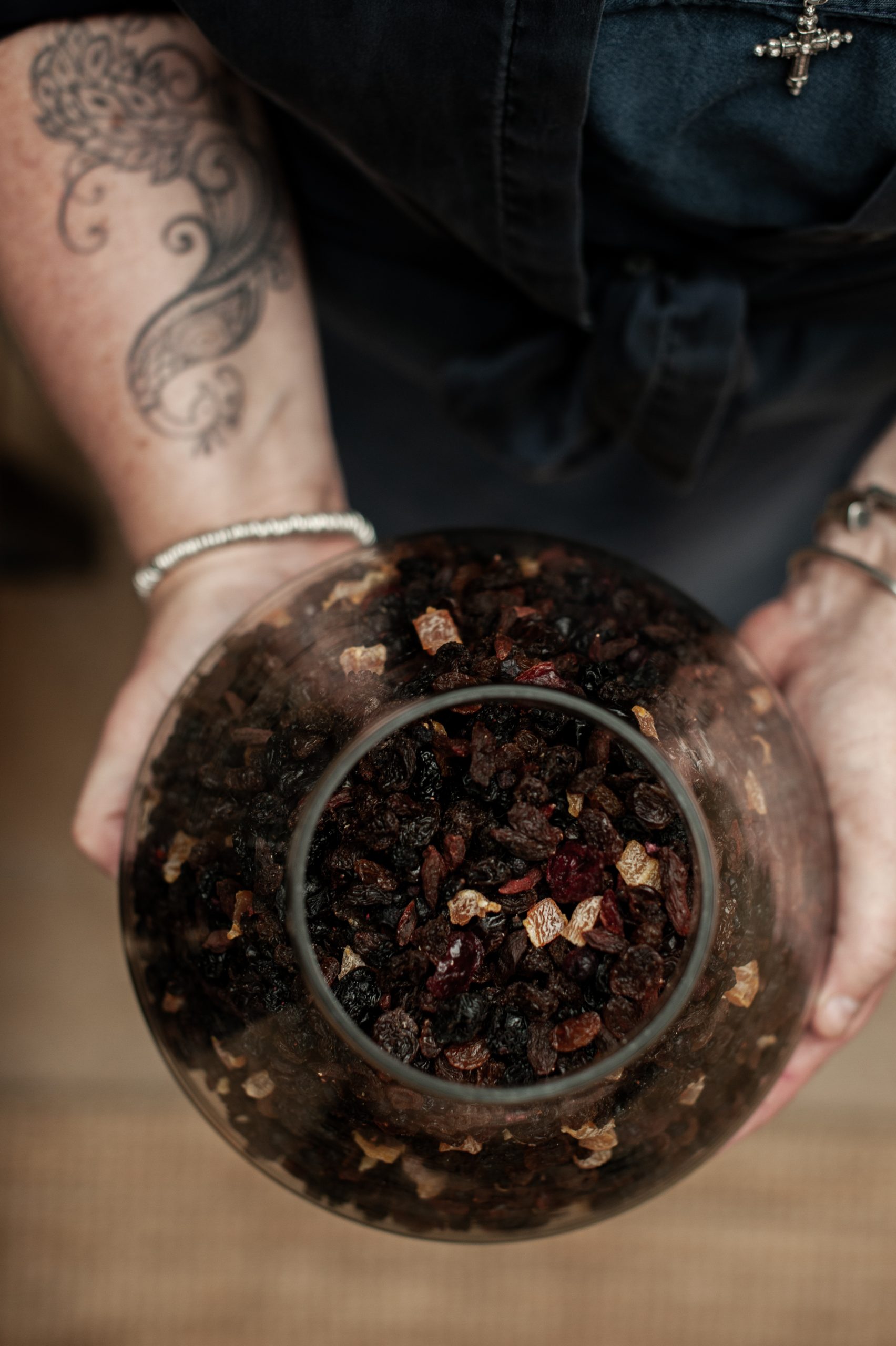
Ginger, dried fruit, nuts, olives — these are classic inclusions. So is Block 9 porridge: you fold the soaked or cooked mixture into the dough and it becomes part of the bread itself, changing the texture, the hydration and the way the loaf digests.
Remember: inclusions affect hydration. If you are folding in 100g of soaked seeds or fruit, pull back a little water in your mix and watch your fermentation — use the three levers (hydration, timing, temperature) to keep control.
Additions — added during mixing
Additions are added at a specific, deliberate point later in the mixing process — once the dough has developed and the gluten structure is established. You are introducing something without undoing the work you have already done.
Timing matters here. Too early and the seeds or flakes disrupt gluten development. Too late and they do not incorporate evenly. The recipe will tell you when to add them.
Coatings — covering the outside
A coating is applied to the outside of the dough — usually after shaping, before the final proof. You roll the loaf through seeds, press it into a tray of grains, or dip it so that the entire outer surface is covered. The coating bakes into the crust.
Sesame, poppy, linseed, oats — Block 5 seeds and Block 8 flakes both work beautifully as coatings. They toast against the hot oven, they protect the crust, and they add another layer of diversity to your loaf.
Finishes & Toppings — the final act
A finish is everything that happens to the outside of the dough at the very end — just before or as it goes into the oven. This is broader than a simple sprinkle. A finish might be:
A roll through seeds so the whole outside is covered in the final moments before baking
Maple seeds, pumpkin seeds or flakes scattered or pressed onto the top surface
A wash — egg, water, milk or oil — to change how the crust colours and behaves in the oven
A dusting of flour for a rustic, matte finish
Coatings and finishes can look similar. The distinction is timing: coatings are applied before the final proof; finishes are the last thing you do before the heat.
The ingredient does not change. The technique — and therefore the name — does.
The same pumpkin seed from Block 5 is an inclusion if you fold it into the crumb, an addition if you incorporate it partway through mixing, a coating if you roll the shaped loaf through it, and a finish if you scatter it on top just before the oven.
Quick Reference
| Name | When | Where it ends up |
| Inclusion | Folded in during bulk or shaping | Inside the crumb — visible when sliced |
| Addition | Added at a specific point during mixing | Distributed through the dough |
| Coating | Applied after shaping, before final proof | Full outer surface — bakes into the crust |
| Finish / Topping | The very last step before the oven | Outside of the loaf — scatter, roll, press, wash or dust |
One final thought.
These are not rigid categories with policed borders. Baking is fluid and so is language. What matters is that you understand what you are doing and why. If you are putting something inside the bread, you are including it. If you are putting something on the outside at the end, you are finishing with it. Everything else is a matter of timing.