The Sourdough School

WORKSHOPS || ONLINE TRAINING | || RETREATS || PERSONALISED BREAD || GUT HEALTH

PERSONALISED BREAD. BAKE WITH THE HANDS OF AN ARTISAN AND THE MIND OF A CLINICIAN

Reduce Bloating · Improve Gut Health · Balance Blood Sugar · Ease IBS · Manage Gluten Sensitivity — Baking As Lifestyle Medicine. Set in the walled gardens of Dr Vanessa Kimbell's beautiful Victorian home in rural Northamptonshire, we run workshops, and our flagship course for practitioners is The Diploma in Personalising Bread. Book in for a chat today.

WhatsApp: +44(0)7813308301
[email protected]
Follow on Instagram

Book a consultation

  • Facebook
  • Instagram
  • Pinterest
  • Twitter

Student Login

Navigation
  • Workshops
    • Book a Call
    • 2 Day Workshops
    • 3 days Personalised Bread Workshops
    • Tuscan Retreat
    • 12 Week Post Course Support
    • Request a Callback
  • Practitioners
    • The Diploma – January 2027
    • Request a callback
    • Graduation Recipe Collection
  • Personalised Bread
    • Personalising Bread Using Nutrigenetics
    • Personalisation
    • Personalising Bread
  • Proven Bread Delivery
    • Proven Bread Documentary
    • Prove it – The Case Studies
    • Baking as Lifestyle Medicine (BALM)
    • BALM & Bread in The Blue Zone
    • Bread as Preventative Health
    • Proven: Bread Podcast
    • Proven
    • Login
  • About
    • About The Sourdough School
    • Priority Access: Join the Waiting List
    • Contact Us & FAQ
    • Reviews
    • General FAQ’s about The School
    • Diversity Bread™
    • Where to stay & more
    • Training Bakers & Healthcare Professionals
    • Educational Awards Programme
    • The Team
    • A Social Enterprise
    • Contributors & Guest Tutors
    • What Our Students Say

Meadowsweet

Estimated time: 5 mins.
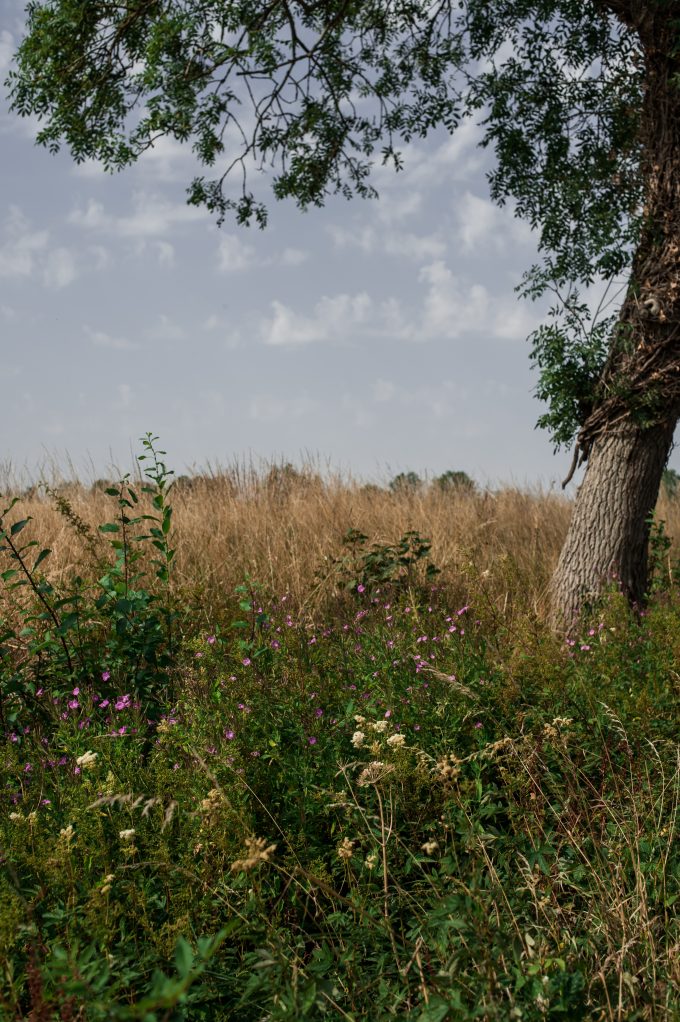
Meadowsweet is actually in the rose family, so it blends really beautifully with roses in Botanical Blends

Meadowsweet, Filipendula ulmaria, is a perennial plant that can be found in ditches, hedgerows, damp fields, or on the edge of streams and riverbanks. In the UK, it can be found in July and August. While it is a native plant in Europe and parts of Asia, it also grows in North America between June and September. It is also known as mead wort, and was often used to flavour beverages such as wines, beers and vinegars in the Bronze Age. I tend to use meadowsweet when I mill my Botanical Blends.

You do need to take care that the flowers and the leaves are thoroughly dried in order to incorporate them into your flour blends. To do this, I dry the flowers over two days in my proving cabinet. Once dried, I store the meadowsweet in an airtight jar to ensure that it retains its lovely fragrance.

I enjoy using meadowsweet flowers in my milling blends when I want to add an element of natural fragrance to my breads. Meadowsweet is a wonderful addition to enriched breads such as brioche or milk breads that have a gentle flavour on their own. I think of meadowsweet almost as an English vanilla, with its lovely notes of honey, vanilla and almond. I feel there is a synergy to using something so aromatic to flavour-enriched doughs.

Meadowsweet is actually in the rose family, so it blends really beautifully with roses in Botanical Blends. I often pair them together for a complementary floral element to my breads. In terms of milling, I typically use 1–2 heads of neadowsweet in 500g of flour.

You can also add meadowsweet to syrups for another floral flavouring option. Fruit syrups such as apple syrups, pear syrups or plum syrups infused with meadowsweet flowers are just delightful for drizzling over cakes or other bakes.

There are warnings about not eating too much meadowsweet since it does contain salicylic acid. Of course, you would have to incorporate quite a lot of Meadowsweet in your breads for that to be a problem, but it is important to note.

DISCLAIMER:

The advice given in this post is based on harvesting in the UK. While we are sharing what we do here at the Sourdough School, ingesting plants that you are not absolutely certain about, or have not identified with 100% certainty can be dangerous. It is very important that you verify any plants that you harvest before consuming them.

Existing Member Login

Disclaimer

All reasonable care is taken when advising about health aspects of bread, but the information that we share is not intended to take the place of treatment by a qualified medical practitioner. You must seek professional advice if you are in any doubt about any medical condition. Any application of the ideas and information contained on this website is at the reader's sole discretion and risk.

  • Facebook
  • Instagram
  • Pinterest
  • Twitter

Email Sign Up

BANT Member
Lifecode GX

Terms and Conditions | Privacy Policy
Copyright © 2026 Vanessa Kimbell
Call +44 (0)7813308301 | Email [email protected]
Registered in England & Wales: 08412236
Website by Callia Web