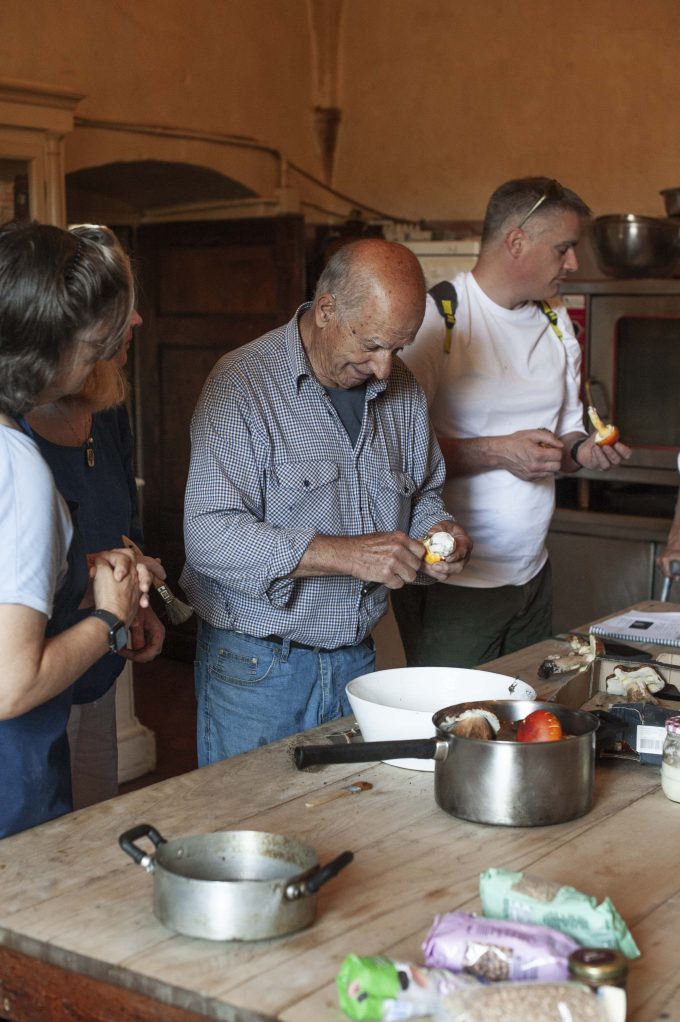
When I teach on the Retreat at Potentino in September we get the most amazing tuscan porcini mushrooms from a friend of Charlotte called Silvano. They are incredible, and they look almost prehistoric. I slice them, looking out for grubs, and inhale their magical aroma, then cook them down with the olive oil from the groves around the castle and put them on top of the pizzas, or brioche, flatbreads or into the sourdough pasta.

PORCINI AND THE GUT
Including ingredient such as Porcini mushrooms (Boletus edulis) is part of the symbiotic eating approach at the heart of the BALM Protocol. Eating bread well means preparing the gut so that it has the resilience and mucosal integrity to welcome bread as nourishment. One of the ways we achieve this is through fibres such as beta-glucans, which feed beneficial microbes, stimulate the production of protective mucins, and strengthen the epithelial barrier. Porcini provide these compounds in abundance, alongside fibre and polyphenols, making them a beautiful example of how food diversity prepares the terrain for bread to play its full role in gut health.
Porcini are unusually high in dietary fibre, particularly insoluble chitin and soluble beta-glucans. These fibres resist digestion in the upper gut, travelling intact to the colon where they act as substrates for microbial fermentation. This fermentation process produces short-chain fatty acids (SCFAs) such as butyrate, propionate, and acetate, which strengthen the intestinal lining, regulate immune signalling, and support healthy bowel movements.
They also contain a remarkable diversity of polyphenols and antioxidant compounds, including phenolic acids, flavonoids, and ergothioneine. Ergothioneine, in particular, is a unique amino acid derivative found in mushrooms that has powerful cytoprotective and anti-inflammatory effects. By lowering oxidative stress in the gut mucosa, porcini may help maintain the integrity of the epithelial barrier, reducing gut permeability.
Porcini provide prebiotic activity through their beta-glucans, which selectively stimulate beneficial microbes such as Bifidobacterium and Lactobacillus species. This enhances microbial diversity, one of the key principles of gut health. A more diverse microbiome not only improves digestion but also influences mental health via the gut–brain axis.
NUTRITIONAL CONTRIBUTION
Fibre density: Both soluble and insoluble fractions, essential for bowel regularity and microbiome nourishment.
Beta-glucans: Known immunomodulators that support mucosal immunity and may dampen chronic inflammation.
Polyphenols & ergothioneine: Antioxidants that protect cells from damage, supporting long-term gut integrity.
Minerals: Rich in potassium, copper, selenium, and zinc – cofactors in enzymatic processes that sustain gut and immune function.
Protein quality: Contain essential amino acids that contribute to repair and regeneration of tissues, including the gut lining.
BALM CONNECTION
In the context of the BALM Protocol, porcini exemplify how food diversity, fibre, and polyphenolsinterconnect: they feed our inner ecosystem, modulate immunity, and add to the sensory richness of eating in community.