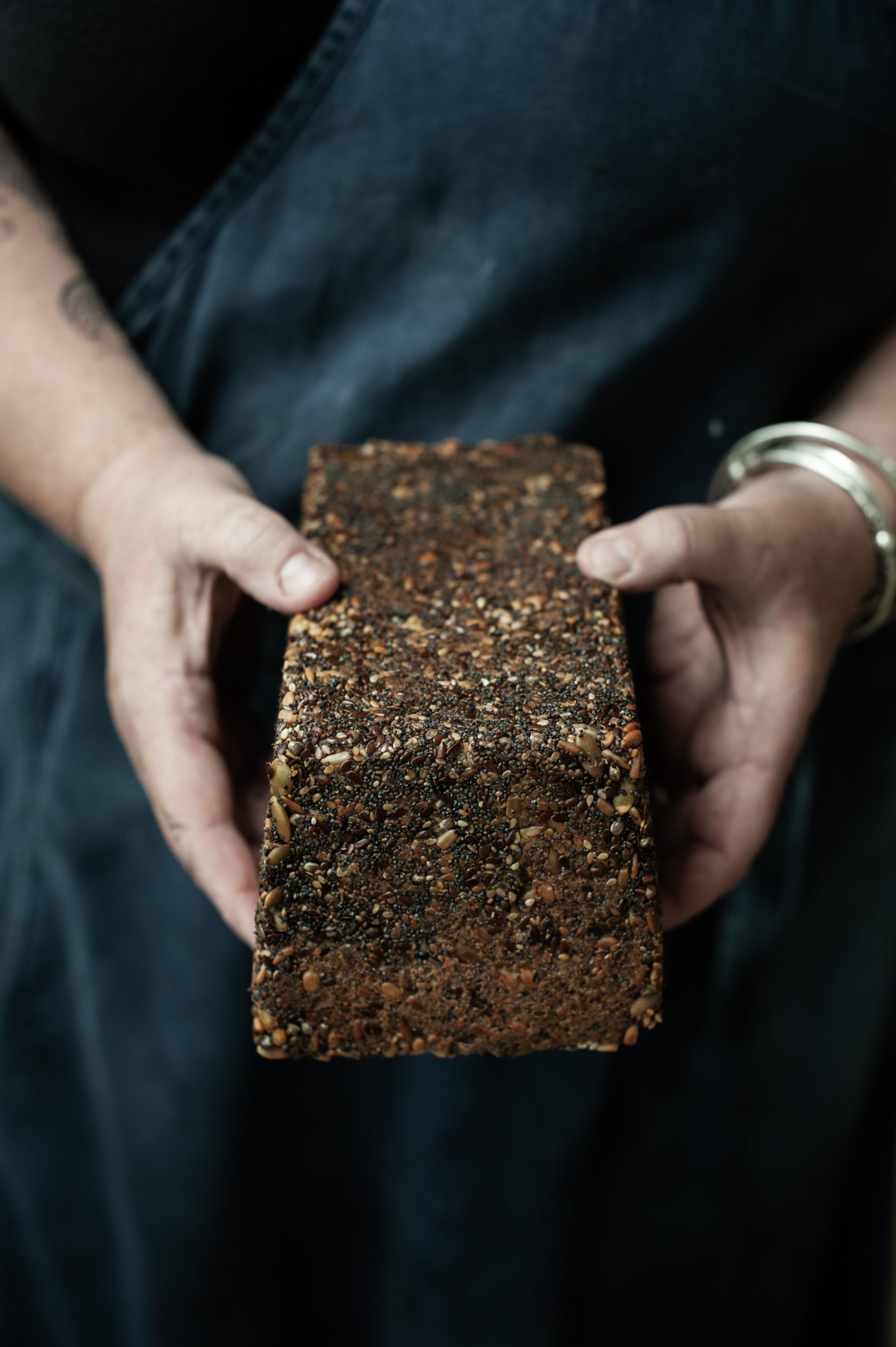
Part of my work is to apply the evidence to our Diversity Breads on the programme
Throughout Proven the evidence on wholegrain is consistent enough to matter. Across large, long-term population studies, people who eat more wholegrains have lower rates of heart disease, stroke, type 2 diabetes, bowel cancer, and early death — and the relationship tends to be dose-dependent: more wholegrain, lower risk. The strongest mechanistic story is the beta-glucan in oats and barley, where clinical trial evidence is robust enough to support an approved health claim for cholesterol lowering at just 3g a day — which is exactly why porridge is built into every loaf I make. But the wider picture is about fibre, diversity, and fermentation working together: slowing glucose release, feeding the gut microbiome, reducing inflammation, and keeping the colon lining healthy. This is not about any single nutrient. It is about what wholegrains, properly made and properly fermented, do across a lifetime of eating. Most of this evidence comes from long-term population studies, though the oats/barley cholesterol effect is also supported by clinical trials. Oats and barley contain a soluble fibre called beta-glucan. Eating about 3g per day has an approved health claim for helping to lower blood cholesterol, a recognised risk factor for heart disease. This is why I recommend making the Sourdough Porridge Pots (page xx) with your starter and using your porridge mixtures.
Reference: Bowel cancer statistics from Cancer Research UK, Bowel Cancer Statistics (2017–19 data). cancerresearchuk.org/health-professional/cancer-statistics/statistics-by-cancer-type/bowel-cancer
A summary of the Research used to select grains used in The Proven Programme Breads
| HEART DISEASE | People who eat more wholegrains tend to have lower rates of heart disease in long-term studies, often showing a ‘more wholegrain = lower risk’ pattern.? Whole grain consumption and risk of CVD, cancer & all-cause mortality (systematic review)? Long-term gluten consumption and risk of coronary heart disease? Cardiovascular benefits from ancient grain bread consumption (RCT) | More fibre and plant compounds, and less refined starch. One of the reasons oats and barley feature highly in my bread is their soluble fibre (beta-glucan), which helps the body move cholesterol out through bile.? A critical review on the impacts of beta-glucans on gut microbiota and human health |
| STROKE | Higher wholegrain intake is also linked with lower stroke risk in large long-term studies.? Whole grain consumption and risk of CVD, cancer & all-cause mortality (systematic review)? Associations between dietary patterns and CVD incidence — UK Biobank (116,806 individuals) | Studies show that wholegrains tend to support steadier blood sugar, healthier blood fats and better blood pressure over time.? Effect of increased whole-grain consumption on blood pressure and cardiovascular risk markers (RCT) |
| TYPE 2 DIABETES | One of the clearest links: people who eat more wholegrains tend to develop type 2 diabetes less often in long-term studies.The rye factor: when people eat wholegrain rye breads (especially denser, kernel-rich styles), they often produce a lower insulin response after the meal than you would expect from the blood sugar response alone. (See notes on roller milled/stoneground flour and blood sugar on page xx).? Whole grain and refined grain consumption and T2D risk — systematic review & dose-response meta-analysis? Structural differences between rye and wheat breads explain the lower postprandial insulin response to rye? Effects of breads of varying carbohydrate quality on postprandial glycaemic response in T2D | Fibre slows how quickly starch turns into sugar, helps you feel satisfied, and feeds gut microbes that make helpful compounds.? Dietary Fibre from Whole Grains and Their Benefits on Metabolic Health? Effects of whole grain rye on glucose tolerance, gut hormones and inflammation |
| BOWEL CANCER | Wholegrains are consistently linked with a lower risk of bowel cancer in long-term studies.? Dietary fibre, whole grains, and risk of colorectal cancer — systematic review & meta-analysis? Whole grain consumption and risk of colorectal cancer — cohort of 60,000 women? Diet and colorectal cancer in UK Biobank — prospective study | Fibre increases stool bulk and keeps things moving. Gut microbes also ferment fibre into short-chain fatty acids (including butyrate) that support the colon lining. This is particularly relevant as bowel cancer is the 4th most common cancer in the UK, accounting for 11% of all new cancer cases, and the 2nd most common cause of cancer death.? Rye bread improves bowel function and reduces putative colon cancer risk markers? Evolutionary perspective on dietary fibre and colorectal cancer |
| HIGH BLOOD PRESSURE | People who eat more wholegrains tend to be less likely to develop high blood pressure in long-term studies, although results vary.? Effect of increased whole-grain consumption on blood pressure and cardiovascular risk markers (RCT)? Whole grain consumption and risk of CVD, cancer & all-cause mortality (systematic review) | Wholegrain eating usually means more minerals and fibre, and fewer refined foods that push blood sugar up and down.? The association between dietary fibre deficiency and high-income lifestyle-associated diseases |
| HIGH LDL CHOLESTEROL | The strongest ’cause and effect’ story is oats and barley: their soluble fibre (beta-glucan) has enough trial evidence for an approved cholesterol-lowering claim at about 3g/day.? Effect of high beta-glucan barley on serum cholesterol — randomised double-blinded trial? Muesli with 4g oat beta-glucans lowers glucose and insulin responses? Effects of beta-glucan breakfast cereals on plasma glucose and insulin in NIDDM subjects | This gel-like fibre helps carry bile out of the body. To replace it, the liver pulls more cholesterol out of the blood. It is why I encourage porridge in all bread and the flakes (see Block 9 for flakes) as a finish on bread.? A critical review on the impacts of beta-glucans on gut microbiota and human health? Beta-glucans improve growth, viability and colonisation of probiotic microorganisms |
| ALL-CAUSE MORTALITY | In almost exact polar opposite to the recent studies emerging on ultra-processed food increasing the risk of all-cause mortality, people who eat more wholegrains tend to have a lower risk of early death in long-term studies.? Whole grain consumption and risk of CVD, cancer & all-cause mortality — systematic review & dose-response meta-analysis? Adherence to international dietary recommendations and all-cause mortality — UK Biobank prospective analysis? Associations between dietary patterns, CVD incidence and all-cause mortality — UK Biobank (116,806 individuals) | This is the ‘whole pattern’ effect over decades: better blood sugar handling, better gut function, and a more fibre-rich diet overall.? Dietary Fibre from Whole Grains and Their Benefits on Metabolic Health |
Note Most of this evidence comes from long-term population studies, though the oats/barley cholesterol effect is also supported by clinical trials. Oats and barley contain a soluble fibre called beta-glucan. Eating about 3g per day has an approved health claim for helping to lower blood cholesterol, a recognised risk factor for heart disease. This is why I recommend making the Sourdough Porridge Pots (page xx) with your starter and using your porridge mixtures.
Reference: Bowel cancer statistics from Cancer Research UK, Bowel Cancer Statistics (2017–19 data). https://www.cancerresearchuk.org/health-professional/cancer-statistics/statistics-by-cancer-type/bowel-cancer